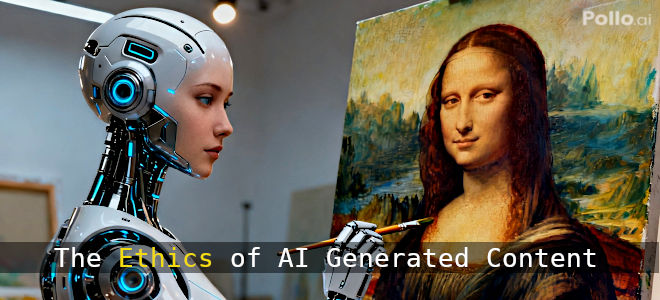
A New Era of Digital Expression – AI generated content
Artificial intelligence has revolutionized the way social media and information are created, consumed, and distributed. But in 2026, AI-generated content is no longer a novelty—it is a headline-dominating force in MarTech (Marketing Technology) platforms, corporate messaging contestation, and self-expression. AI generated content like; automated captions and AI-written blogs, deepfake videos, and synthetic influencers — the digital ecosystem is evolving faster than ever.
But with all of these innovations, a burning question is also emerging: What are the ethics behind AI-generated content? However, as businesses, creators, and digital transformation professionals leverage the AI tools to enhance their content production pipeline, the need for a framework encompassing ethical considerations is becoming more urgent.
In this article, we are going to look at the ethical implications of utilizing AI on social channels, covering everything from authenticity and misinformation to ownership, bias, and responsibility — with some practical tips on doing it ethically.
The Rise of AI in Content Creation
AI-based tools have greatly lowered the barrier to content creation. What took legions of writers, editors, and designers can now be done in minutes, using sophisticated algorithms. Social platforms are filled with posts, articles, images, and videos generated by AIs designed for specific visitors.
AI systems that automate the generation of content have been especially popular with e-commerce platforms. Online store owners can harness the power of automation—tools like the Blog module PrestaShop that take care of blog creation, SEO optimization, or maintaining constant engagement without leaving users toiling away at it. This machine-learning efficiency is certainly a great thing, but risks straying into ethics territory on transparency and authenticity.
Authenticity vs. Automation
Perhaps the most hotly debated of these ethical fault lines is the clash between authenticity and automation. Social media has always been a realm of human expression — stories, opinions, and experiences shared by real people. AI-generated content challenges this foundation.
Users interact with content assuming that there is a human behind it. If a brand creates posts using AI but makes it seem human-written, brands can come off as disingenuous. This opacity erodes trust, the currency of social engagement.
Key ethical question:
Should creators disclose when content is AI-generated?
And by 2026, many experts say transparency should be required. Audiences should be aware of whether they are consuming human or machine-generated content. Ethical content strategies today often feature disclaimers or labels acknowledging AI involvement.
The Misinformation Dilemma
AI systems can generate extremely convincing content at scale. Although this has the upside of marketing and communications, it adds an opportunity for something else: misinformation.
Unknown to AI, or sometimes through intentional design, its posts can spread misinformation. On social media platforms, where content can spread in a flash, the fallout can be severe. Deepfake videos, fake news articles, and deceptive captions can form public sentiment, destabilize societies, and ruin reputations.
If you have an irresponsible approach to AI tools, then they can also add more fuel to this problem if it creates incorrect or unverified content for your blogs and product descriptions.
Ethical responsibility lies in:
- Verifying AI-generated content before publishing
- Avoiding sensationalism and misleading headlines
- Implementing fact-checking processes
Automation does not absolve responsibility for organizations.
Ownership and Intellectual Property
Content ownership is another complex ethical issue. Who owns content that is generated by AI? The developer? The user? The AI itself?
2026: Evolution of Legal Frameworks, but the Sensible Stuff is Beyond Just Legal AI models are trained on large datasets that frequently include copyrighted content. This leads to doubts on whether AI-written content is original work or a remix of other people’s work.
Compliance with No Plagiarism: For enterprises utilizing solutions such as the Blog module PrestaShop, it is critical that the content produced doesn’t unintentionally copy or duplicate any material presently available.
Best practices include:
- Be Inspired by AI, Do Not Reproduce It
- Running plagiarism checks
- Adding human editing to ensure originality
Just because we live in the age of AI does not mean ethical content creators ignore intellectual property when it comes to creating their own.
[See related article: How To Use Stock Photos Without Getting In Legal Trouble]

Bias and Fair Representation
AI systems are as unbiased as the data they are trained on. Sadly, lots of datasets carry systematic biases connected to gender, race, society, or class.
These biases can show up in subtle or obvious ways when AI generates content. For example:
- Stereotypical portrayals in generated images
- Biased language in blog posts
- Unequal representation in marketing content
On social media, this can perpetuate harmful narratives while further marginalizing underrepresented communities. Businesses generating content with tools powered by AI should take active steps toward bias control.
AI generated content: Ethical strategies include:
- Regular audits of AI outputs
- Using diverse and inclusive datasets
- Humans are monitoring to detect and fix bias
Where ethics in tech and the desire for diverse communities are concerned, fair representation is not only a moral requirement.
The Role of Human Oversight
Although AI is excitingly avant-garde, there is a human on the end. It allows AI to be a collaborative tool as opposed to a replacement for humans and their creativity and intuition.
Blind faith in automation will take you to:
- Generic, impersonal content
- Ethical mistakes
- Loss of brand identity
The ethical way is to combine AI efficiency with human insight. For instance generating initial drafts with AI tools, and then human editing to allow productivity and authenticity.
Human involvement is critical for:
- Understanding context
- Applying emotional intelligence
- Making ethical decisions
In 2026, the most effective content strategies are those that complement automation with human creativity.
Transparency and Disclosure
Transparency as a new ethical practice for AI content creation. More users are aware of AI’s role in content creation and reasonably expect brands and creators to be honest about it.
Disclosure can take many forms:
- Labels indicating AI-generated content
- Notes in captions or descriptions
- Platform-level indicators
Although there are fears from some that disclosure will diminish engagement, research shows the exact opposite: transparency breeds trust and credibility.
Adding a simple disclaimer such as this is good not only for brand integrity but also for businesses to make their content/blogs AI-proof and does not reduce the effectiveness of content creation.
Impact on Employment and Creativity
The rise of AI-generated content has led to fears about people losing their jobs. They’re worried automation will lessen the demand for writers, designers, and content creators.
The actual situation is more even. AI is not killing creativity—it’s changing it. New roles are developing, such as:
- AI content editors
- Prompt engineers
- Ethical AI consultants
AI isn’t taking jobs; it’s changing the skills in the content industry.
Ethically, organizations should:
- Book and train their employees/staff
- AI, assist don’t replace human talent
- Value human creativity as a unique strength
Platform Responsibility and Regulation
The social platforms are the primary regulators of AI-generated content. In 2026 numerous competing platforms implemented policies to tackle those ethical dilemmas:
- Identifying and labeling AI-generated content
- Restrictions on deepfake media
- Penalties for spreading misinformation
However, enforcement remains a challenge. Content creation often outpaces moderation.
Governments and regulatory authorities are also getting in on the action by enacting laws to protect stakeholders from unethical AI. These regulations aim to:
- Protect users from deception
- Promote transparency
- Hold creators accountable
Companies need to keep up with these regulations in order to maintain compliance and ethics-based business practices.
Ethical Guidelines for AI Generated Content
Organizations must adopt clear guidelines to navigate the ethical landscape of AI-generated content. These guidelines should include:
Transparency
Disclose the use of AI where suitable.
Accuracy
Verify all information before publishing.
Originality
Human Language model, just changing the words, but still, this is not an exact replica.
Inclusivity
Do not be biased and encourage representation.
Accountability
Ensure accountability for all content published, no matter its point of origin.
The Future of Ethical AI Generated Content
In the future, we are expected to adapt to AI-generated content ethics as well. Technologies like advanced generative models and real-time personalization will complicate the ethical landscape even further.
Key trends to watch include:
- AI-generated influencers and virtual personalities
- Highly personalized content experiences
- Increased regulation and standardization
As these trends become more prevalent, the need for ethical considerations will only continue to grow.
Ethical organizations will benefit from reduced risk and competitive advantage. Ultimately, trust and authenticity, as well as accountability, will be the true drivers of sustained success.
[See related article: Virtual Influencers And AI Avatars: The Next Big Shift In Digital Marketing]

Conclusion:
The ethics of AI generated content on social platforms is not whether AI should be used, but how to actually use it responsibly.
Tools such as the Blog module PrestaShop give great opportunities for efficiency and scalability. However, with this freedom comes responsibility. But businesses and creators need to take on ethical concerns like authenticity, misinformation, ownership, bias, and transparency.
The point here is not to stifle innovation but to steer it. The solution lies in the convergence of human values and AI that would ultimately lead to an efficient, ethical, inclusive, and trustworthy digital ecosystem.
The future of content creation in 2026 and going forward will belong to those who recognize that ethics is not a constraint, but the bedrock of sustainable success.
[Recommended reading: Eight AI Tools For Your Social Media Marketing Campaigns]

[Image credits – Main Photo created with Pollo.ai; Lifeguard Hut: Alamy; other images are from their respective websites and/or social platforms or articles]
